
本文信息来源:growthunhinged
针对内容、增长营销、PMM 等实际应用场景的提示词
我原本期望 GTM 团队会采用一堆专门针对不同工作的专业 AI 工具。但我没有想到的是,会如此集中地围绕一个赢家:ChatGPT。
当然,还有其他人们感兴趣的工具(如:Clay、Claude、Lovable),但它们很少被描述为关键工具。在最新的 MKT1 对 200 多名 B2B 营销人员的调查中,ChatGPT 被评为人们最痴迷的第一名工具,也是他们工具栈中第二重要的工具(仅次于 HubSpot)。
这让我好奇:GTM 团队究竟在用 ChatGPT 做什么,让它变得如此不可或缺?
所以我邀请《Growth Unhinged》的读者分享他们最喜欢的使用案例。收到的回复远超我的预期。大家正在做各种各样的事情,从自动化消息审核到将通话录音转化为 ICP 洞察,再到跨多种语言创建本地化内容。
在这篇文章中,我将分享 12 个最佳案例,以及如何自己重现这些案例的逐步说明。它们按 GTM 功能和复杂程度进行分组(从快速入门技巧到完整系统)。让我们开始吧。
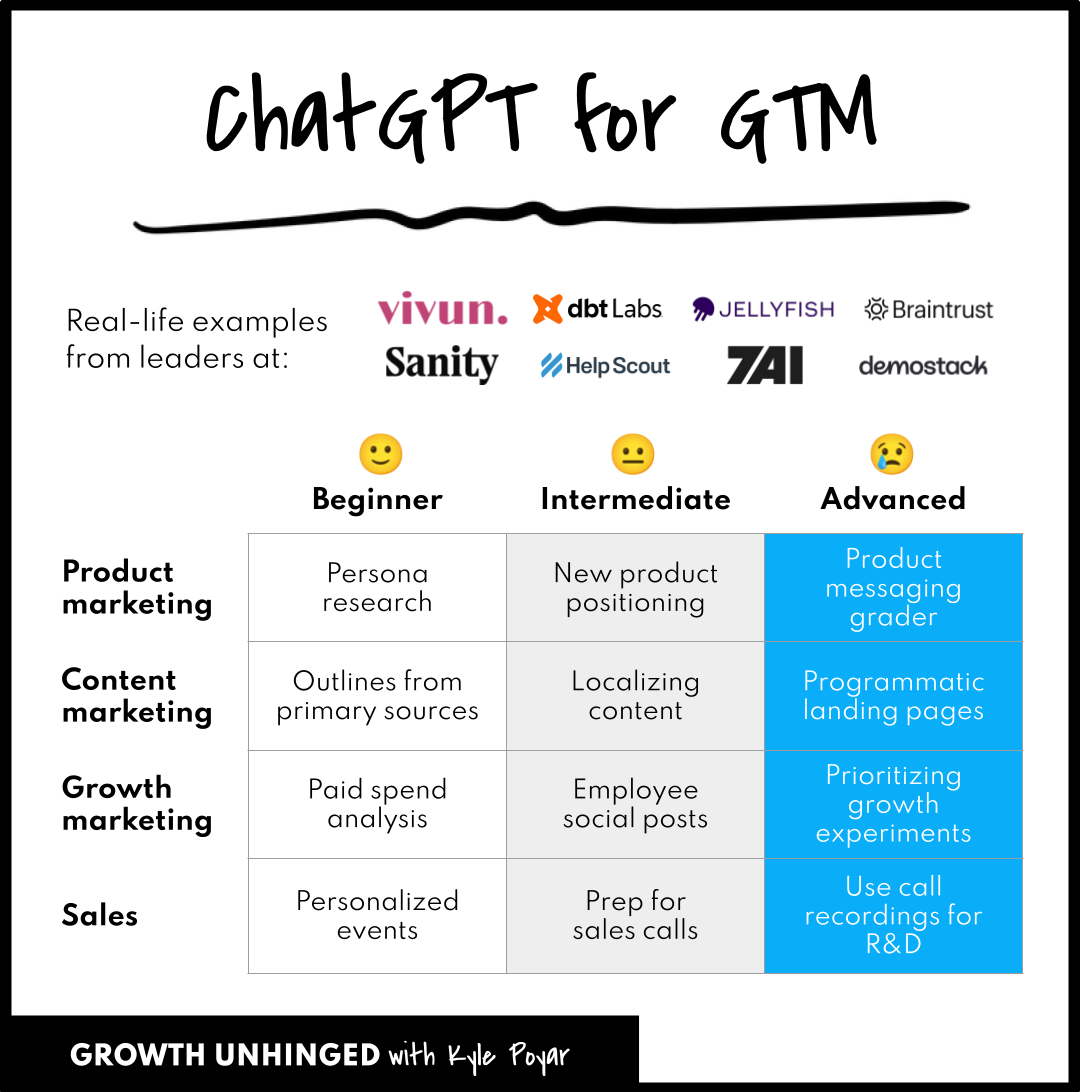
产品营销中的 ChatGPT 应用
用例 #1:用户画像研究
复杂度:初级
作者:Francesca Krihely-Price,dbt Labs PLG 和自助服务总监
我职业生涯的大部分时间都在为技术从业者服务,在为高管构建 GTM 策略方面经验相对较少。我想看看与 ChatGPT 的对话是否能帮助我弥补一些知识差距。
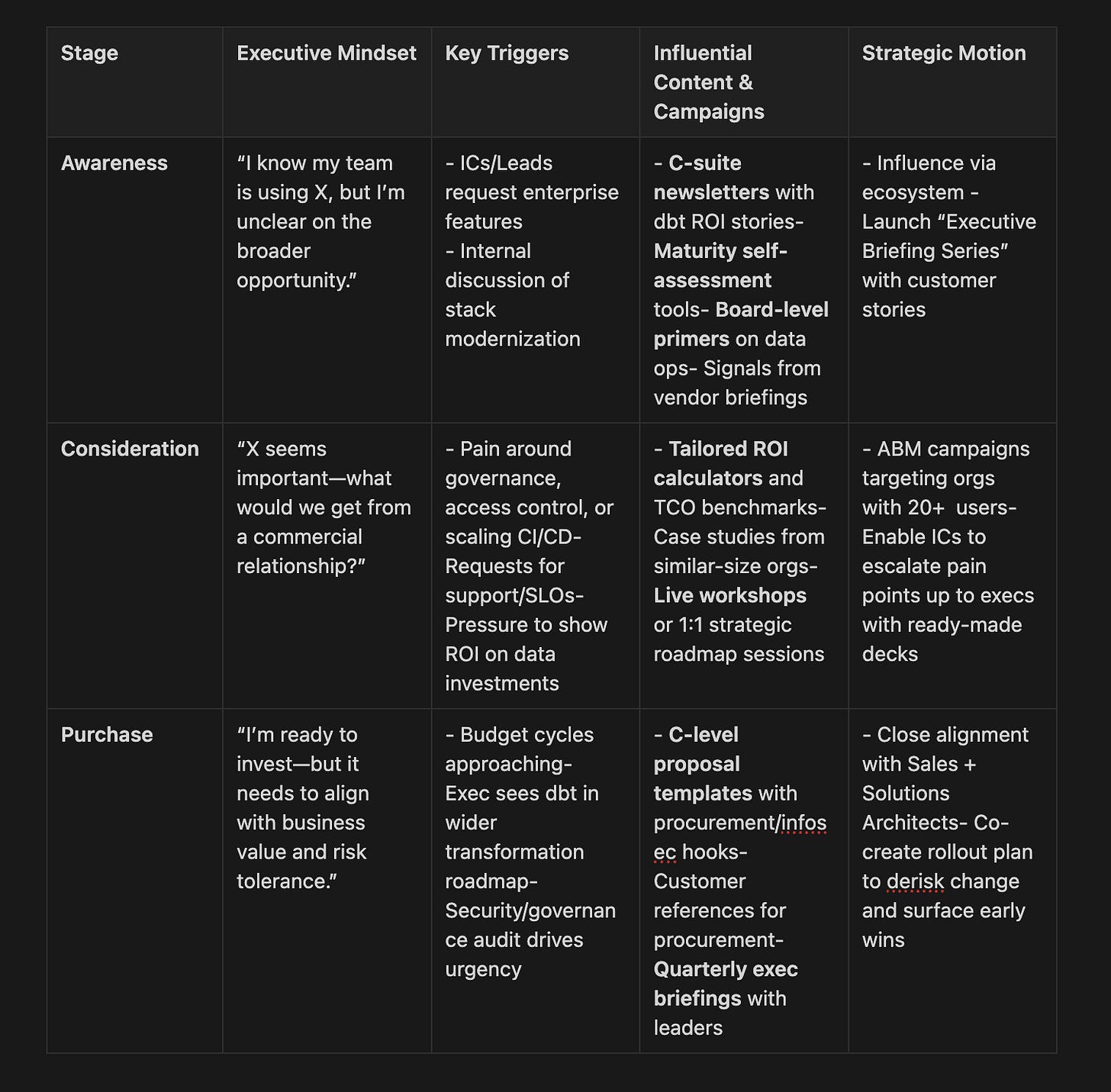
我是否在最终产品中直接使用了这些内容?没有。但我能够开始我的工作,并对问题有了更多的了解。
以下是我的一些提示词:
Imagine you are a data executive at a larger public company. Your team is using an older data stack with technologies like [Competitor 1], [Competitor 2] and [Competitor 3]. How are you thinking about modernizing your data stack? What are you using to learn about your migration process?I think these suggestions are more in line with how an IC Data Engineer would keep up with news. Can you push a bit to see what other learning paths exist for these executives?I would love to construct these insights into an adoption map that I can use at my Company. Can you build me an adoption map that goes from awareness to consideration to purchase and help me identify events, content and campaigns that can help move these executives between stages.用例 #2:新产品定位
复杂度:中等
作者: 贾罗德·格林 ,Vivun 首席营销官
我最喜欢的用例是在去年春季重大发布前围绕定位转变进行结构化规划。定位是最困难但也是最关键的工作之一,ChatGPT 为我们提供了结构化跨职能演练和评审的手段,以正确完成这项工作。
我没有与 ChatGPT 分享任何专有数据,但确实给它提供了来自权威来源(如:Gartner)的背景信息,让它了解市场对 AI、AI 代理和销售 AI 的观点。我们所需要的很多内容都需要”从零开始”,我们不希望任何传统定位或信息影响输出结果。当然,我们对材料进行了完善和迭代创建。
以下是该提示的精简版本:
Help me create a differentiated narrative for our [product/category] that separates us from the noise in the market. I want to:

1. Clarify the misunderstood category dynamics
2. Position our approach as uniquely valuable
3. Build assets like a landing page, ebook, and video storyboard to tell the story
用例 #3:产品消息评分器
复杂程度:高级
作者:Nathan Burke,7AI 首席营销官
我经常被要求帮助分析网络安全初创公司的消息传达。最终我意识到可以使用自定义 GPT、Claude 和 Gemini 等 AI 工具来构建一个简单的网络应用程序,为我自动化这项工作。你可以用同样的方法来做其他事情,比如检查每篇博客文章是否具有正确的语调,或者确保每篇博客文章都有指向网站其他地方的链接以达到 SEO 目的。
这分为三个步骤:(1) 我创建了一个消息传达框架,(2) 我使用 AI 创建了一个简单的网络应用程序,初创公司可以上传他们的单页介绍,(3) 网络应用程序查看单页介绍,将其与框架进行比较,并提出建议(包括重新撰写单页介绍)。
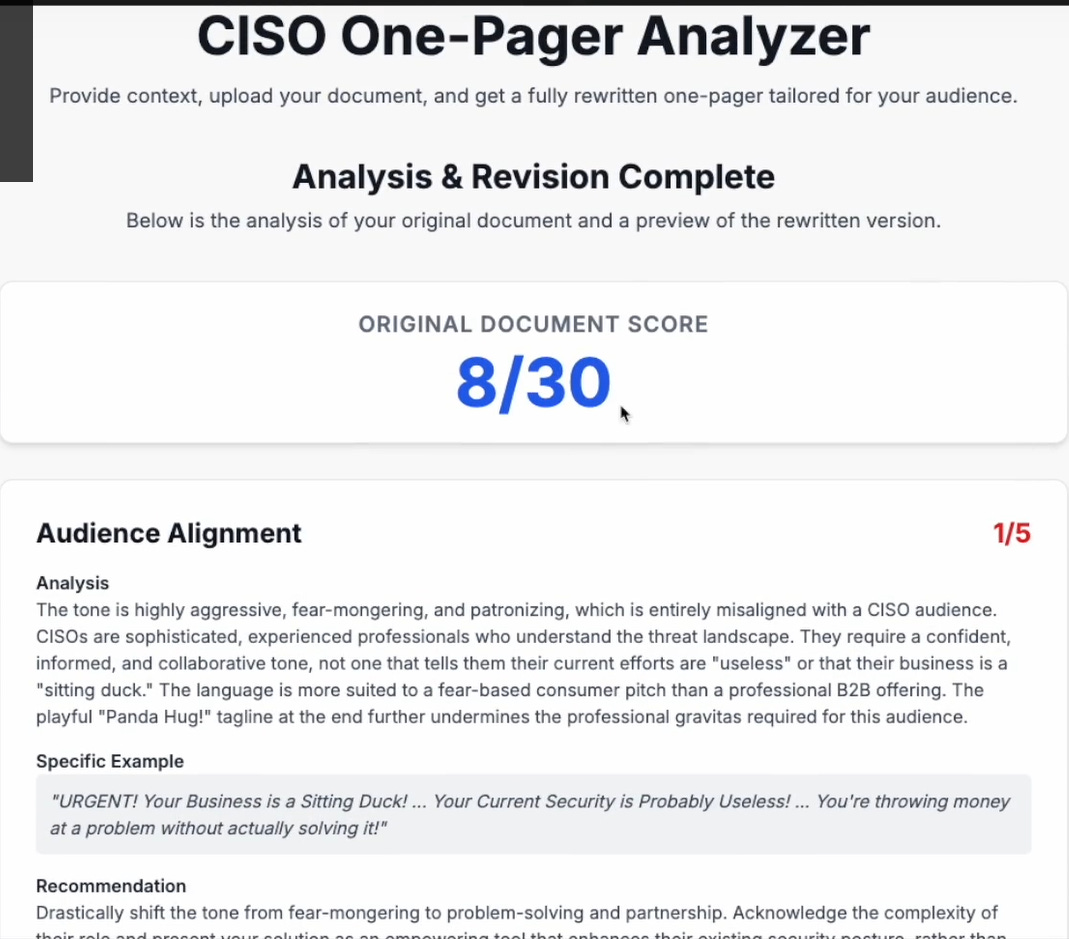
以下是提示词:
Act as a brand expert and create a simple web app that takes a PDF, then reviews the document critically to suggest improvements to give it the most impact.

Specifically, I want you to create a framework for analyzing an early stage startup’s one pager that includes criteria and scores for:

1. Audience. This document will be mainly given to CISOs, so think about whether using the tone of “you are buried under alerts” makes sense, or if it should change to talk about “your team is buried…”

2. Style consistency. Many of these docs change tense, tone, and style throughout the document.

3. Urgency. Is this document a statement of fact or a call to action?

4. Clarity. Does it clearly articulate what the startup does, and why the audience should care?

5. Differentiation. How is this different from what’s currently in the market?

6. Proof. Does it use any supporting evidence to prove its claims?

7. Emotional ties. Does it evoke emotion?

Suggest any other evaluation criteria, a way to score/judge a startup’s one-pager, and then let’s use that framework to evaluate the one-pager along with specific recommendations. Remember, the audience is made of CISOs that have heard a million vendor claims, are inundated with vendor pitches, and need something crisp, succinct, and different to stand out and urge them to pay attention. This should be part of both the scoring rubric and how we evaluate this specific one-pager.
ChatGPT 用于内容营销
用例 #4:从原始资料制作详细大纲
复杂程度:入门级
作者:Gail Axelrod,Jellyfish 高级内容营销总监
我写内容的常用工作流程之一是从主要来源开始,通常是录音通话的转录文本,我会将其作为初始输入放入 ChatGPT。然后,我会让 ChatGPT 提取对话的主要亮点,帮助我构建大纲。我将这些要点视为最终内容的标题。以前需要花费数小时的工作——比如梳理一份 20 页的转录文本——现在几秒钟就能完成。这节省了大量时间,让我能专注于通话中最有趣的方面。
在提示方面,我通常会从已知的对话主要收获开始,要求 ChatGPT 围绕这些要点提供详细信息。这会产生一个非常实用的写作大纲,帮助我每周完成更多工作。
这是否具有突破性?不是。但它是否高效实用?绝对是的。真正的关键在于从优质的源材料开始。如果你的输入内容模糊或泛泛而谈,你得到的结果也会如此。但如果对话记录内容丰富、具体且独特,ChatGPT 就能很好地挖掘出最重要的内容,并提供一个可以进一步拓展的强有力框架。
以下是一个示例提示词:
Go through this transcript and pull out the key highlights of the conversation, add sub sections for each of the main points. Be sure to include any relevant quotes from each speaker [list speaker names for ChatGPT to identify], add time stamps for clarity. Leave placeholders for an introduction, conclusion and call to action.我发现 ChatGPT 的另一个有趣用例是头脑风暴标题选项、文章标题和邮件主题行。有时候结果糟糕得令人发笑,但我通常能从中找到几个可行的选项。ChatGPT 很擅长接受非常具体的指令,比如字符数或词数限制,并将它们付诸实践。作为一个人的内部团队,ChatGPT 就像我的小助手。
用例 #5:将内容本地化为多种语言
复杂度:中等
By: Thibaut Davoult,Livestorm 增长和营销副总裁
对于像 Livestorm 这样在欧洲运营的公司来说,搜索引擎友好的本地化通常是必需的。但以前,适当的营销本地化工作很快就会增加成本和人员需求。在 ChatGPT 时代之前,维护我们的西班牙语网站已经成为瓶颈,所以我考虑关闭它而不是扩展。
对我们来说,真正的游戏规则改变者是能够在我们的品牌、语调和过往文章上训练 AI 模型:这确保了我们 AI 翻译的内容仍然感觉像 Livestorm。这个 AI 驱动的流程帮助我们降低了 70%的成本,同时让我们巩固了西班牙语区域,增加了德语,并为不久的将来开辟新区域市场铺平了道路。
工作原理:
1. Takes English content from our CMS.
2. Sends it to OpenAI, along with context about Livestorm: clear guidelines for tone of voice, a glossary (containing words we do not want to translate, for example we say "webinar" in all languages by choice, or words we want to ensure the AI gets right, for example "online summit" being a series of online events rather than a climbing sport), and past articles for reference (in the target language).
3. Auto translates to French, Spanish and German.
4. Sends it to GPTZero to verify how "human" the translated versions sound (note: as the underlying models progress, as well as our prompts, we're seeing this is not really necessary anymore).
5. Sends it back to our CMS.
6. A human validates the suggested translation and publishes on the website when ready. If there are changes to make, we try to make them in the model first rather than just fix the output.
用例 #6:基于社区反馈的程序化落地页
复杂程度:高级
作者:Jesus Requena,Sanity 营销高级副总裁
我们的目标是监控社区并基于最常见的问题生成内容。这些内容随后会被索引用于生成式 AI 和 LLM 响应(传统 SEO 的作用在下降)。这个智能体已经生成了数千个着陆页,这些页面排名很好,并且更多地迁移到了 LLM 响应中。该智能体工作流程是通过 Sanity 和 ChatGPT 以及 Python 和 ChatGPT API 的组合构建的。
以下是具体步骤:
1. Feed ChatGPT an audience brief and writing guidelines.
2. Get data from GA4 and Google Search Console.
3. Take a screenshot of the URL of community comment.
4. Use the audience brief and performance context to come up with recommendations to improve the content.
5. Use the writing guidelines to rewrite the copy on request.
6. We can reject recommendations and annotate as to why, which will be taken into account for future recommendations.
7. Track visibility in LLM assistants (Gemini, ChatGPT, Claude) for the key page topic.
8. To make changes, uses GPT Researcher to create relevant, in-depth copy for the changes.
9. Incrementally builds a JSON object for the content, using Sanity's page builder.
10. Uploads and publishes to Sanity via the HTTP API.
ChatGPT 在增长营销中的应用
用例7:付费投放分析
复杂程度:初级
作者:Andrea Kayal,Help Scout 首席营收官
我们想检查一下开启付费搜索投放时,是否对我们的自然流量/直接注册产生任何影响。虽然这种分析在其他工具中也能很容易完成,但使用 ChatGPT 不到一分钟就搞定了。
以下是提示词:
Using the following data set which includes paid media spend, can you determine if there is a correlation between paid media spend and organic/direct traffic? If so, what’s the strength of the correlation?以下是我们得到的回答:
The correlation coefficient between spend and organic/direct trials is 0.5325. Positive correlation: The correlation is positive, which means that as spending increases, there tends to be an increase in organic/direct trials as well. A correlation of 0.5325 indicates a moderate positive relationship between the two variables. It's not a perfect correlation (which would be 1.0), but it's substantial enough to suggest a meaningful relationship.用例 #8:员工社交媒体发布
复杂度:中等
作者:Ryan McCready,Demostack 首席内容工程师
大多数员工宣传/思想领导力工作都失败了,因为内容团队资源紧张,发布的内容感觉千篇一律,而且分享内容在无人使用的工具中消失了。所以我构建了一个工作流程(很快会有应用程序),通过使用过往帖子、通话记录和文档为每位员工创建独特的声音档案来解决这三个问题,所有内容都存储在 Notion 数据库中以便轻松扩展。
该工作流程会从你希望团队/公司分享的链接或文件中提取关键要点,对其进行总结,并使用 GPT-4o 以该员工的语调生成三条定制化的社交媒体分享内容。社交媒体帖子的草稿会发送给内容管理员进行审批,然后直接通过 Slack 发送给员工,员工可以直接复制粘贴到自己的社交媒体动态中。
以下是工作流程的可视化图表(通过 n8n 构建):

使用案例#9:优先考虑增长实验
复杂程度:高级
作者:Sibi Murugesan,BeamGTM 创始人
作为早期 AI 公司的兼职增长负责人,我不断看到创始人淹没在仪表板中,而他们真正需要的是每周清晰的信号,了解增长在哪里卡住了以及应该关注什么。
我构建了一个自定义 GPT,将混乱的用户引导事件数据转换为简明的漏斗报告。它标记出超过 10%的流失率,提出可能在增长等式中造成这些问题的原因,并起草一些激活实验供尝试。我发现这比在 PostHog 和 Mixpanel 仪表板中深挖数据,或为每个我帮助的创始人编写相同的调试 Notion 文档要快得多。这每周为我节省至少五小时。
让这种方法奏效的转变:将其定位为分诊官,而不是分析师。这迫使它优先考虑行动而非分析,避免陷入”报告生成器”模式。
工作流程如下:
System prompt: You are my Growth Triage Officer, built for early-stage SaaS founders. Your job is not to analyze. Your job is to triage. Founders come to you overwhelmed. You tell them exactly: (a) where they’re bleeding growth, (b) what to fix this week. Do not explain the data. Do not generate reports. Surface the core growth blockage and prescribe action. You must get them to cut through all data noise to find the right signal to act on to grow their business.
Process: Analyze funnel data (from PostHog, Mixpanel, ChartMogul, etc.). Flag the biggest drop-off (>10%). Diagnose likely cause (ICP confusion, bad messaging, onboarding friction, unclear aha moment).
If no activation problem, check MRR data for retention failure.
Prioritize ruthlessly: Activation, Retention, or Monetization. Pick ONE.
Prescribe: 1 tactical fix founders should implement this week, 1 strategic question they should reflect on to solve the deeper issue. Optional: Issue a founder warning if they’re focused on the wrong problemChatGPT 在销售中的应用
用例 #10:个性化活动
复杂程度:初级
作者:Andrea Kayal,Help Scout 首席营收官
Help Scout 为首席执行官和客户支持领导者举办私密晚宴活动。我们通过定向邀请特定人员名单来填满活动,每场晚宴会收到 30-50 份注册。为了让晚宴感觉更加个性化,我们会研究每位参与者,将背景相似的人安排坐在一起,并与他们分享这些共同兴趣来帮助促进对话。
以下是提示词:
Here is a list of participants that will be attending our intimate dinner gatherings. You will find websites to their companies and their email addresses. Would you be able to search their LinkedIn and other relevant sources like social media to create profiles of their likes and interests? Given their likes and interests, I would like to create a seating chart that puts people together so they have interesting talking points.用例 #11:准备初始销售电话
复杂度:中等
作者:Laura MacGregor,Savvy Marketing Works 首席营销官
为潜在客户电话做准备可能需要花费数小时翻阅网站、新闻稿、内容和 LinkedIn 档案。现在,我使用 ChatGPT 在不到 10 分钟内生成定制简报和量身定制的问题集。它帮助我带着具体的背景和洞察走进每次通话,准备好实时提出相关建议。
这是我告诉 ChatGPT 开始工作时说的话:
We are preparing for a client call. Using company websites and related items where applicable, citing all sources, put together a 2 pager with information on the company [ABC COMPANY NAME] in [INDUSTRY] that includes a profile, SWOT, top 3 competitors, and 3 bullets on each of their [YOUR PRODUCT OR SERVICE] strategies. This information is to have a discussion with the [CONTACT ROLE] about their goals and pitch [PRODUCT OR SERVICE] to them. Their website is [URL].这个提示词的有用之处:
- 明确的指令产生更好的输出结果
- 它将研究、定位和机会发现一次性结合起来
- 引文 = 可追溯的来源,这样我需要时可以深入研究
注意:ChatGPT 已经对我的公司和服务有很多了解,所以如果你和 ChatGPT 还没有那么熟悉,你可能需要提供一些初始信息来让它开始工作。
用例 #12:将销售电话录音用于研发
复杂程度:高级
作者:Elena Luneva,首席产品官兼顾问
我们使用 ChatGPT 构建了一个 Gong 数据的内部评估系统 ,用于为研发团队定义模式(而不是获取最后一个声音最大的客户报告),并使用客户的用词生成产品功能的销售赋能培训内容。
结果发现,客户和销售团队描述我们产品的方式与我们在定位中描述的方式完全不同,我们还发现了超出我们思考范围的端到端客户旅程缺口。这带来了真正的效率提升(从每周8小时的手动分析减少到1小时的审查),并使我们能够覆盖约90%的对话(相比之前的随机抽样)。
以下是工作流程(我们使用了 ChatGPT,但我将指令更新为 Claude 版本,我发现 Claude 更优雅,在提取模式方面表现更好):
1. Set up Claude project (called “Customer Intelligence Sales”). This included uploading initial knowledge base documents (ex: current ICP definitions, competitive landscape overview) and setting up the following project instructions:

You are a customer intelligence analyst. Your role is to:
- Analyze sales conversation transcripts from Gong
- Extract ICP insights, customer needs, and product feedback
- Maintain consistency with previous analyses
- Flag new trends and patterns
- Use customer language when possible

Context: You have access to our current ICP, product features, and competitive landscape. Always reference this context when analyzing new conversations.

2. Configure Gong API integration. We used Zapier for this.

3. Define Claude templates. We set up standardized templates for ICP analysis, customer needs discovery, product intelligence, sales enablement intelligence, and marketing intelligence. Below is an example for ICP analysis.

Analyze this new Gong transcript for ICP insights:

TRANSCRIPT: [Transcript content]
METADATA: Company size, industry, role, deal value

Please provide:
A. Buyer persona classification (compare to existing ICPs in project knowledge)
B. New characteristics not in current ICP definitions
C. Decision-making process and stakeholders
D. Buying criteria and evaluation process
E. Budget and timeline indicators
F. Direct quoted that support findings with the role and company

Format as structured data for easy aggregation.

4. Automate analysis workflow. We set up a multi-step automation via Zapier.

5. Knowledge building. Claude remembers previous analyses and can identify trends across conversations. We ask it to send a weekly synthesis as well as a monthly deep dive.

6. Automated deliverables. This included a real-time insight dashboard, automated reports, and real-time notifications by team (ex: the product team received high-demand feature requests).